Zixel

A 2.5-D Graphical Tactile Display System

First Author. ACM SIGGRAPH Asia 2011. TEI 2012. Paper
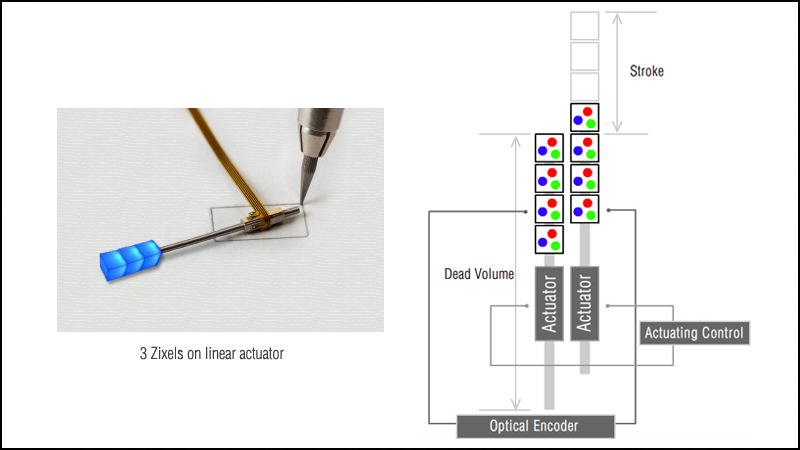
Zixel single-actuator unit and system schematic
Left: A single Zixel actuator unit consisting of three RGB-illuminated pins mounted on a piezoelectric linear drive, with a flexible ribbon cable for signal and power delivery. Right: System-level schematic depicting the RGBZ pixel array, dual actuator stage with dead-volume compensation, optical encoder feedback loop, and actuating control pathway governing per-pixel stroke displacement.
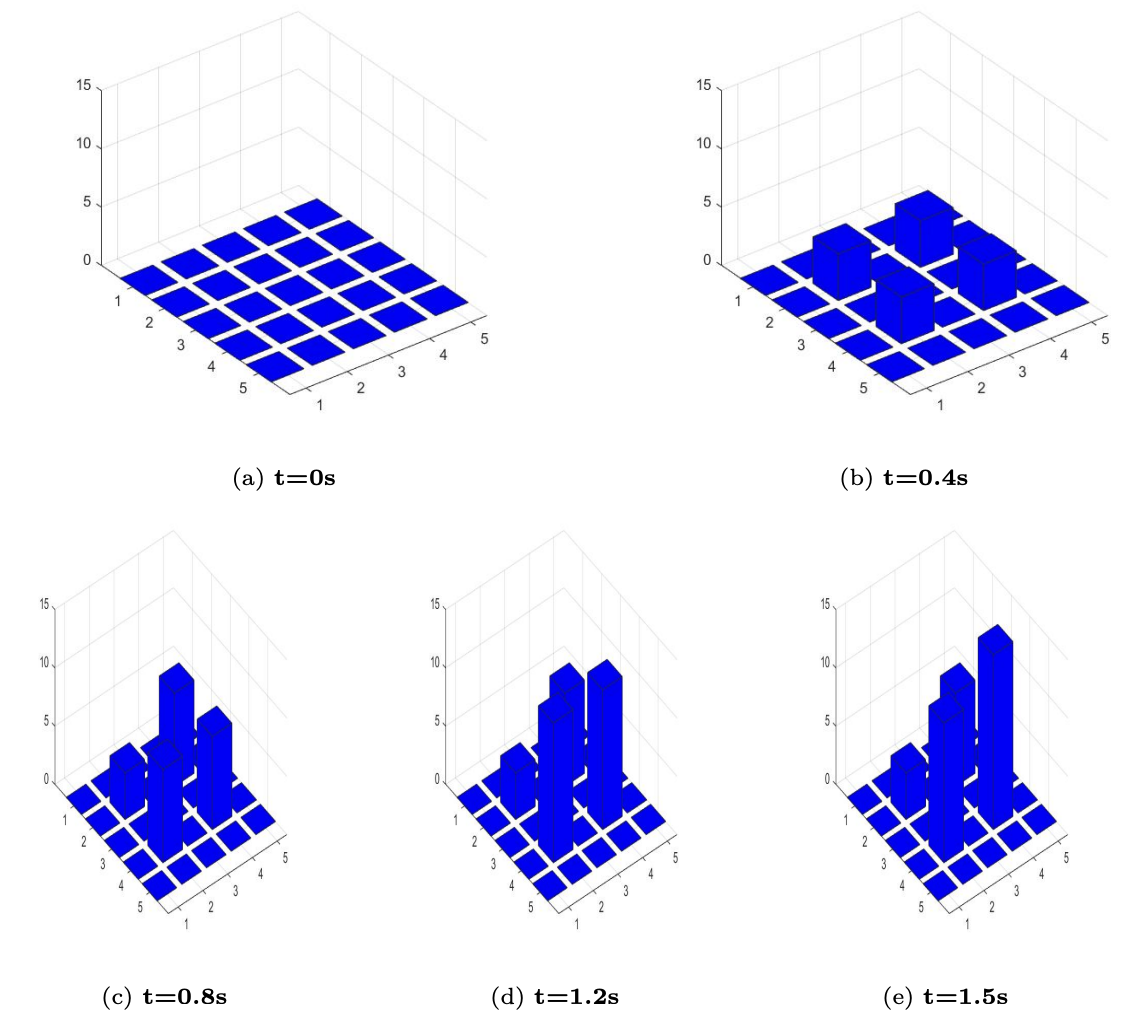
Zixel temporal surface deformation sequence
Temporal sequence of a simulated 3-D bar-graph surface rendered on the Zixel display at intervals from t=0s to t=1.5s, illustrating the progressive actuation of individual pixel columns to form a dynamic topographic relief pattern.

What if computer graphics of the present day could be physically touched and felt, in addition to being seen? Virtually rendered graphics displayed on a regular 2-D screen provide a rich visual feedback about the object. Present day touchscreen based devices employ direct manipulation of the screen elements, which are essentially a 2-D extension of the real 3D form. However, the feedback is limited by what the screen can render. We looked upon and found that there is a missing z-dimension without which a display lacks the stimulus for the sense of touch since there is no confirming tactile feel that buttons and UI controls provide when they are touched.

Interactive RGBZ (Red, Green, Blue, Z-axis) Pin-Art which is controlled by the computer and can render colored pixels. This project aims at extending the present 2-D displays into a 2.5 D form where graphics as well as haptic sensation could be directly communicated. We also define a basic actuated addition to present 2-D pixel form, a physical Z-axis, which caters to the physical manifestation of the virtual object for rich tactile and graphical feedback.

Update: TEI 2012 | SIGGRAPH ASIA 2011 paper.

Zixel CAD rendering of single unit and assembled array
CAD renderings of the Zixel hardware. Left: Exploded view of a single RGBZ pixel element showing the translucent colored diffuser cap seated atop the metallic actuator shaft. Right: A fully assembled multi-column display array rendering a pixelated topographic surface with per-pixel color mapping from black through orange to red, demonstrating simultaneous chromatic and z-axis displacement output.
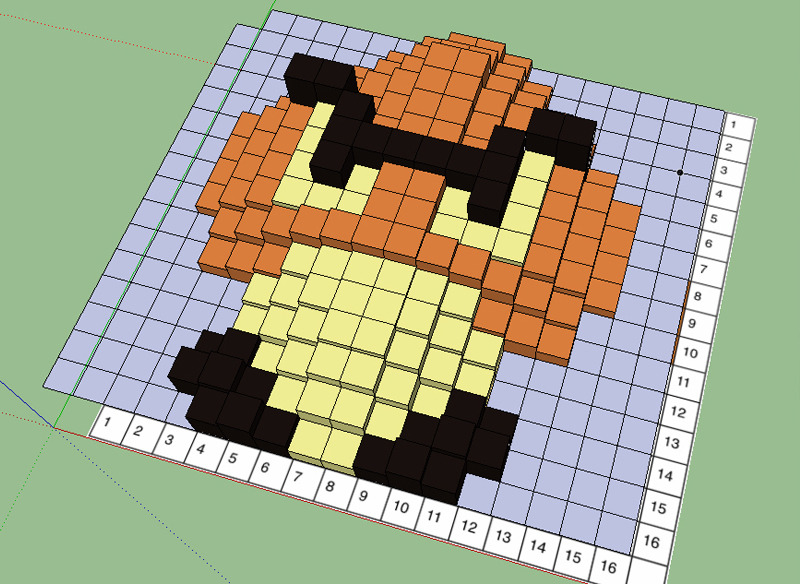
Zixel 3-D model of RGBZ character rendering
Oblique-perspective 3-D model of a 16x16 Zixel grid rendering a polychromatic character sprite. Discrete pixel columns are displaced along the z-axis and assigned individual hue values, demonstrating the system's capacity for combined spatial relief and color-mapped graphical output at sub-centimeter resolution.
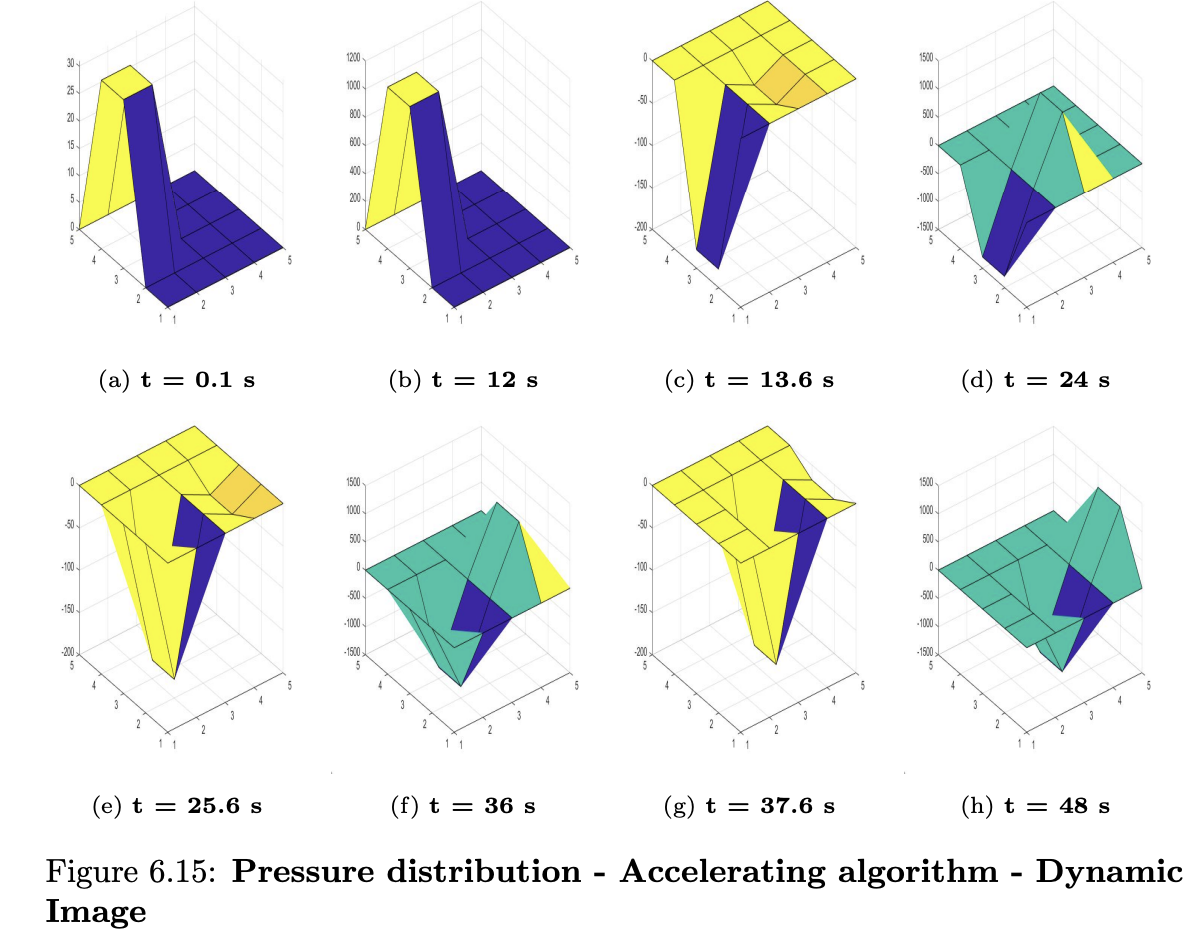
Pressure distribution simulation over time
Time-resolved simulation of pressure distribution across the actuated display surface under a dynamic acceleration algorithm (t=0.1s to t=48s). The evolving 3-D surface plots illustrate non-uniform force propagation and convergence behavior as the pin array transitions between target topographic states.
Comparative analysis of tactile display systems
Comparative survey of shape-changing tactile display systems, benchmarking Zixel against prior platforms (Tangible, Feelex, Lumen, Matrix, PopUp, ShapeShift) across hardware form factor, spatial resolution per pin, actuation mechanism, and integrated sensing modalities. Zixel achieves the finest reported pin pitch at 0.3cm x 0.3cm using piezoelectric linear drive motors.
Zixel physical prototype rendering pyramids
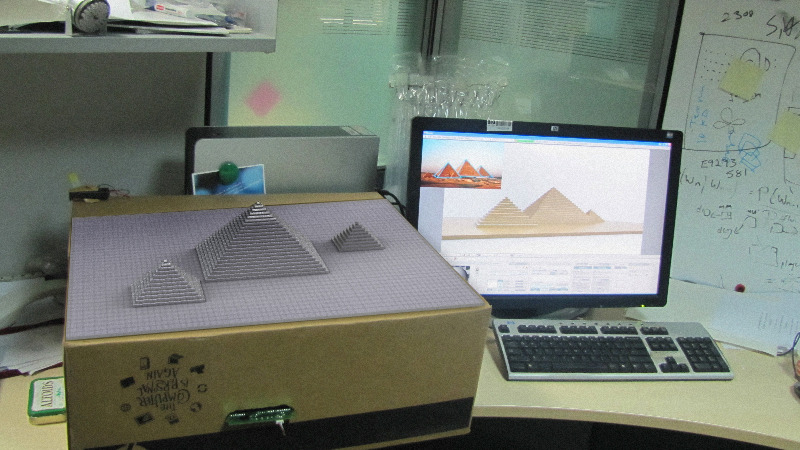
Functional Zixel prototype operating in a laboratory setting, physically rendering a pair of pyramid geometries on the actuated pin-array surface. The corresponding reference image of the Great Pyramids of Giza is displayed on the adjacent monitor, demonstrating real-time translation from a 2-D source image to a tangible 2.5-D topographic output.