In-toilet Sensing
Non-invasive physiological monitoring through passive urinalysis
- Team
- Anirudh Sharma, Jaideep
- Context
- Independent research project
Motivation
A routine visit to a commercial diagnostics chain in India set this project in motion. The process was familiar: urinate into a plastic bottle, hand it over, return days later for results. Five other patients at the counter had identical bottles. The test itself – urinalysis – is among the oldest and most informative in medicine, yet the collection and feedback loop remained slow, manual, and disconnected from the patient's daily life.
Approach
The premise was straightforward: a toilet is one of the few objects a person uses every day, in private, with biological output readily accessible. If you embed sensors where the transaction already happens, you eliminate the friction of clinical sample collection entirely. The system never asks the user to do anything differently. It just listens to what the body is already discarding.
Prototype
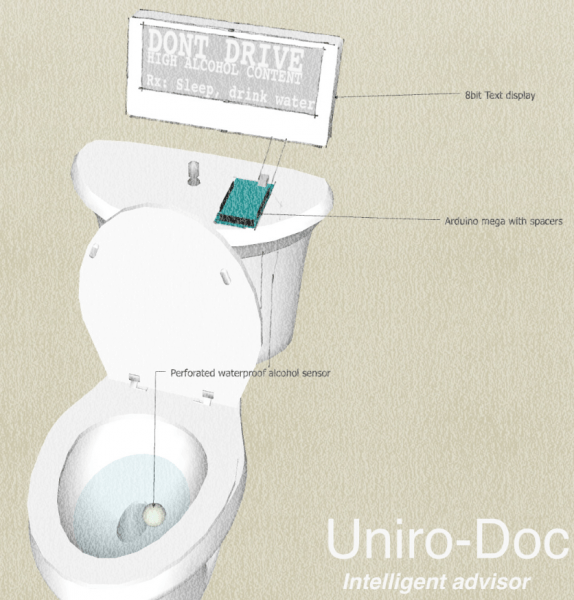
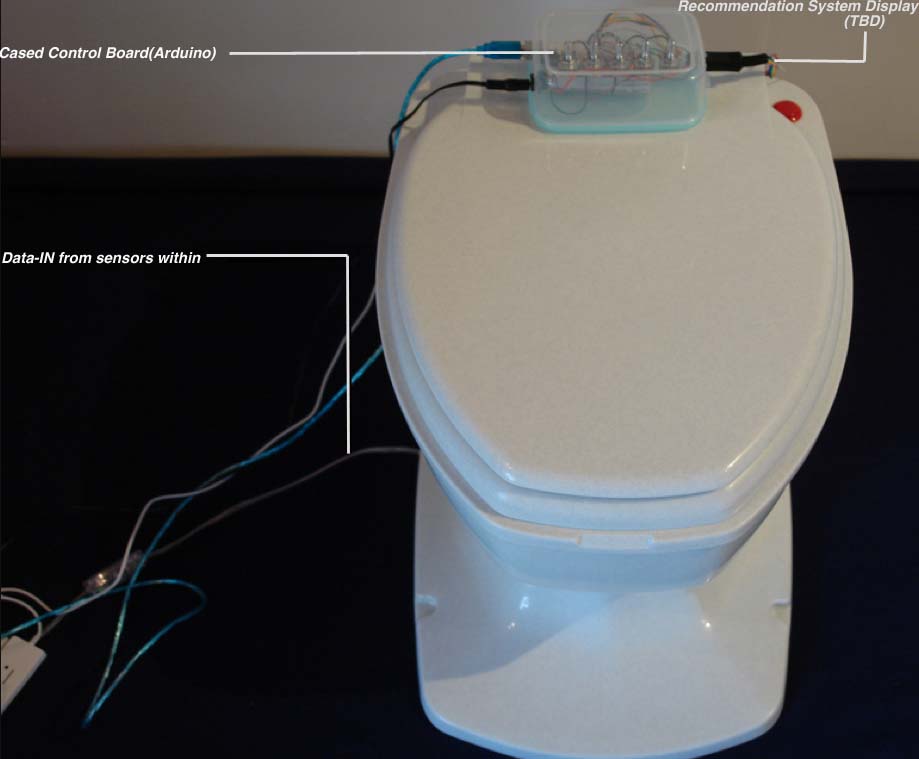
We started with alcohol as the first analyte – a waterproof gas sensor mounted in the bowl cavity, tuned to detect ethanol vapor in urine. An Arduino Mega reads the sensor array, processes the signal, and routes a contextual message to a small wall-mounted display: not a clinical readout, but a plain-language recommendation. "High alcohol content detected. Drink water, avoid driving." The tone is advisory, not diagnostic – a nudge, not a verdict.
Messages follow a simple template: analyte level (high/low), a contextual interpretation, and an actionable recommendation. The system is designed to be non-alarming – it surfaces patterns over time rather than triggering anxiety on any single reading. The goal is ambient health awareness, not a replacement for clinical testing.
Roadmap
The roadmap extends to glucose, salinity, and pH monitoring – each a well-understood urinary biomarker with established clinical thresholds. Glucose tracking alone would cover a significant portion of early diabetes screening in populations where regular clinical access is limited. Salinity correlates with hydration status. pH shifts can flag urinary tract infections before symptoms appear.
Thesis
The deeper question this project explores is passive physiological sensing – what happens when health data is gathered continuously, without effort, from infrastructure people already use. A toilet, a shoe, a door handle: these are the sensing surfaces of a world where models run at the edge and the person never has to think about data collection. The clinical visit becomes the exception, not the entry point.