Problem
A series of explorations in which we introduce AR into everyday interactions, enabling non-obtrusive interaction with digital information. Team: Anirudh Sharma, Lirong Liu, Pattie Maes, MIT Media Lab.
Approach
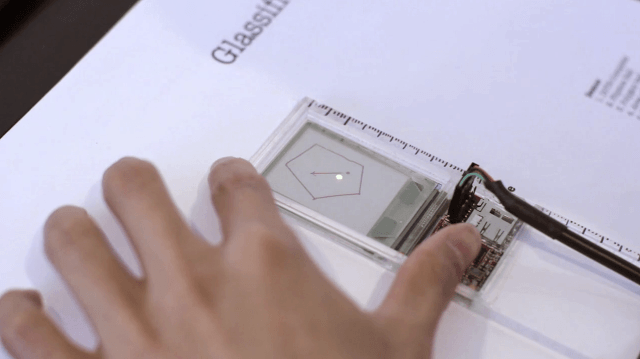
Glassified – A ruler has two fundamental functions: 1) to draw straight lines and 2) to measure dimensions. Through our Glassified prototype, we aim at extending those capabilities. It’s a modified ruler with a transparent display to supplement physical strokes made on paper with virtual graphics. Because the display is transparent, both the physical strokes and the virtual graphics are visible in the same plane. A digitizer captures the pen strokes in order to update the graphical overlay, fusing the traditional function of a ruler with the added advantages of a digital, display-based system.
System
The system pipeline flows from Pen Input to an Interaction Manager that handles gesture recognition and maps gestures to commands, which are then transmitted via RS-232 to the OLED Rendering stage. Optical pen stroke sensing captures strokes in physical space; a spatial calibration step bridges the physical coordinate system into augmented space, enabling precise registration between what the user draws on paper and what the transparent display renders.
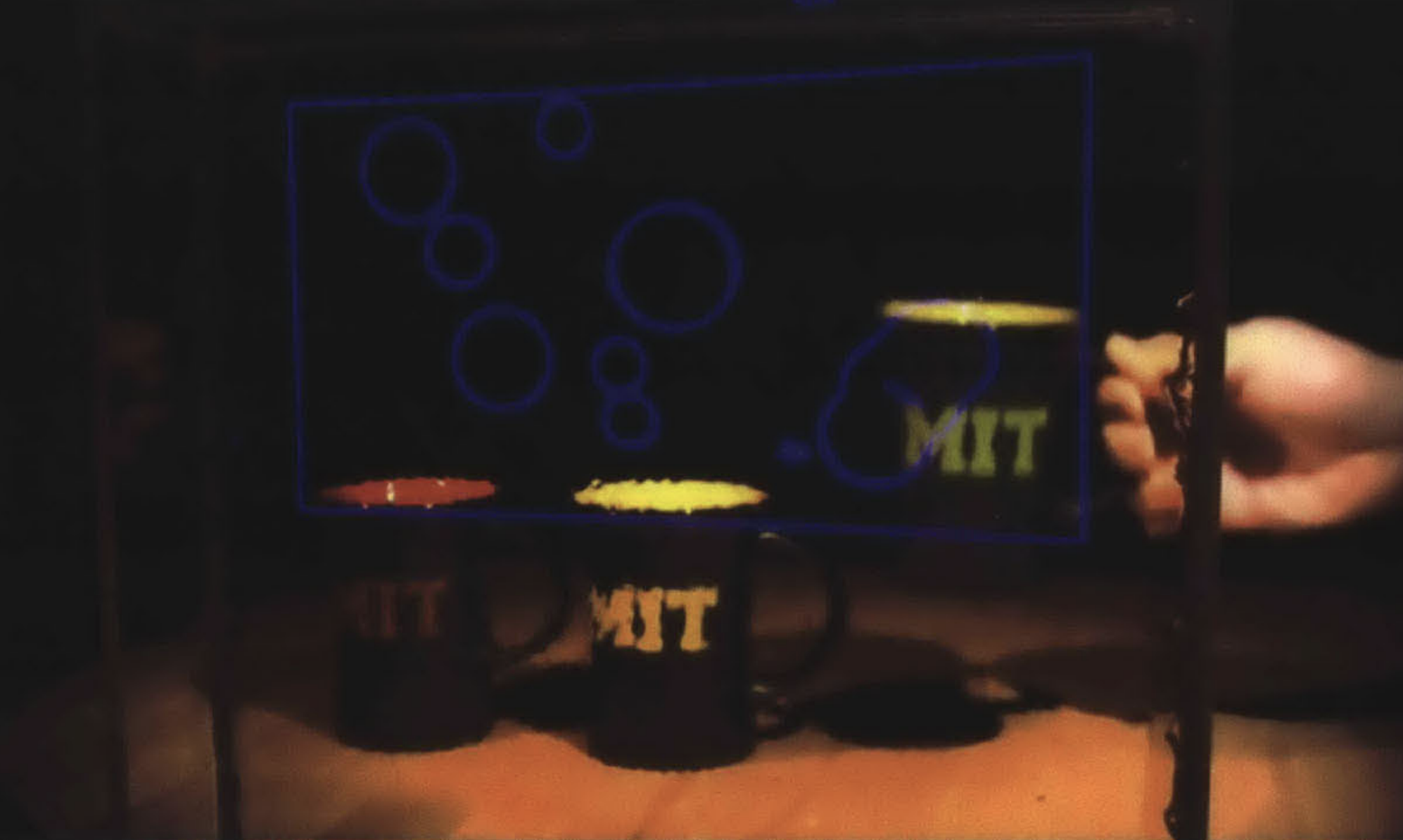
Augmented Magnifier: We explore the fusion of magnifying properties of glass and digital augmentation of transparent displays – combining two layers of information: digital and optical. A transparent OLED display is overlaid on the magnifying glass, and computer vision detects objects. The system then computes and pulls metadata about the physical object from an online data source.
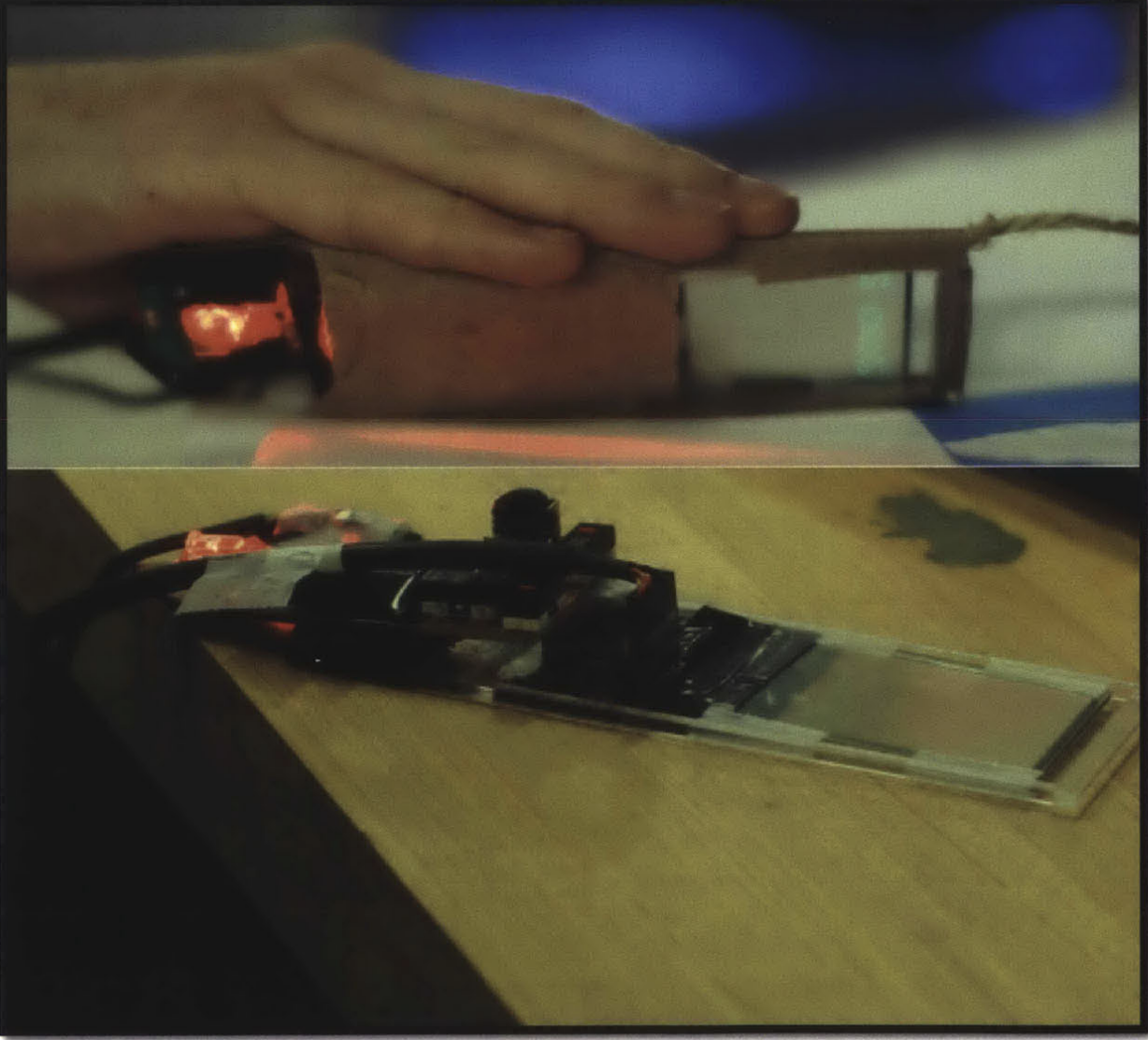
LittleAR: A 2-inch transparent OLED and a mouse sensor combined in a form similar to a paper bookmark. The design naturally affords translation on paper such that the user can move it along paper similar to a magnifying glass. The thin OLED display allows graphical augmentations to be almost in the same plane as the paper, creating a seamless fusion of the virtual and real world.
Source code for Glassified 0.1 is released. Its kind of messy right now but you should be able to compile it with VS2010.
Video Demos
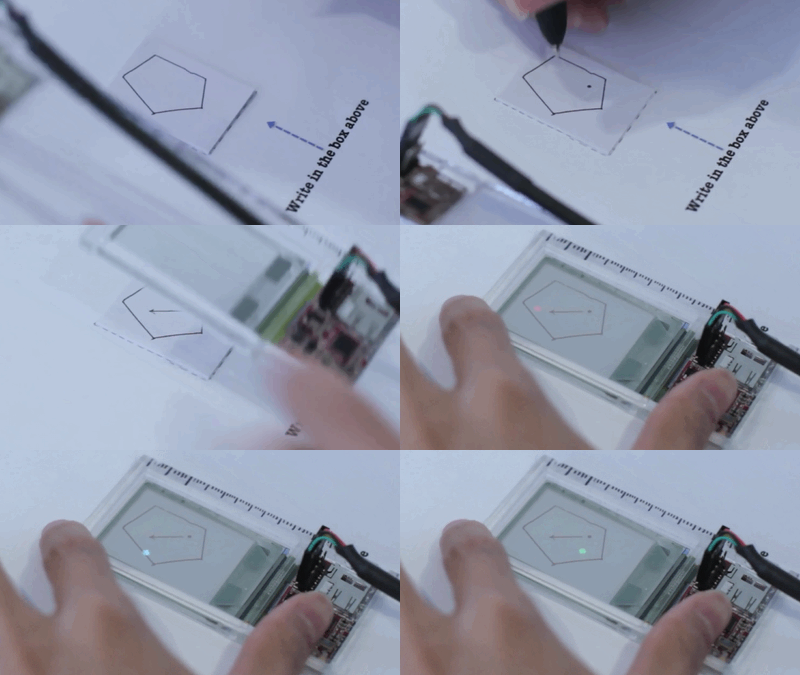
Glassified: the transparent OLED ruler augmenting pen strokes on paper with real-time virtual graphics.
Glassified Optical Tracking and content mapping.
Variants
Augmented Magnifier: the system preserves both the regular functionality of a magnifying glass and the digital capability of transparent displays on the same plane.
LittleAR: using a mouse optical sensor for on-paper tracking with a bookmark-sized transparent OLED.
Recognition