Now evolution is a slow process, and as humans and smartphone users this evolution to ’not drop things’ is going to only happen in a million years. It’s easier to redesign bodies/smartphones.
I shattered two phones in the last two years, two screens I got replaced were expensive and quite a hit on the pocket. Humans drop things.

What I don’t understand is that the screen is the most sensitive part of the phone yet it shatters easier than a feather. The phone has other parts too–an incomprehensibly well made PCB, modem, battery, and the casing.
Observing a smartphone physically:
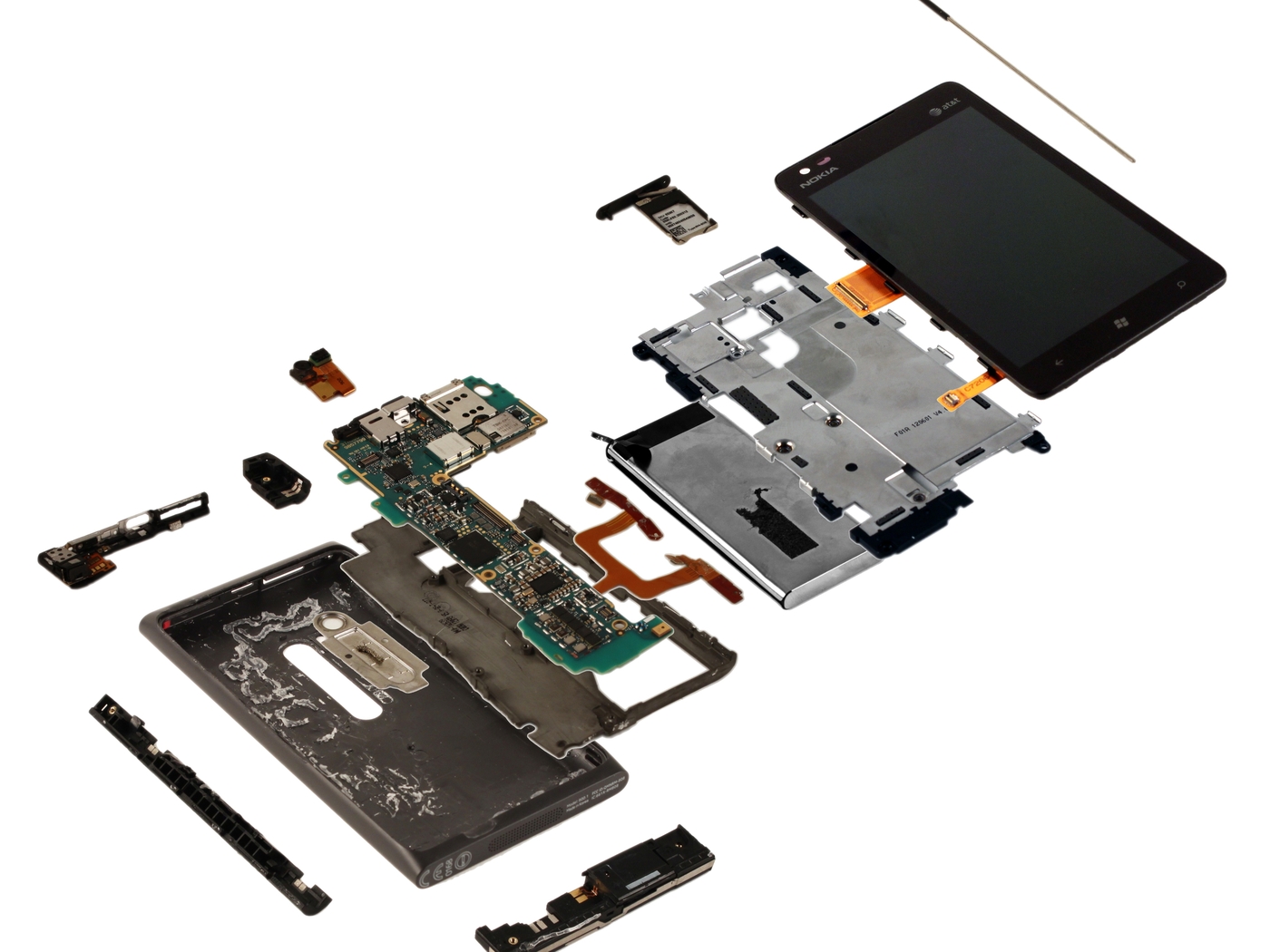
Now the parts above with respect to screen are packed in this fashion primarily for three reasons: packing, protection and function. The case’s job is to protect, the electronics are for function, and fasteners/glues for packing.
It’s pretty clear that current design of smartphone fails pretty badly at protection. One of the most expensive parts, the screen (aluminosilicate glass) is just a part that’s yet to evolve as a hardened material, or oriented badly so that the most adept human gesture of grasping objects comes with a small false negative that’s called dropping.
I also don’t like phone cases.
What if phones were designed as shuttlecocks
Understanding the beauty of fall
Not that we’ve played a lot of badminton. At 108 in Baba’s room there’s been a shuttlecock hanging on the window. The most beautiful thing to be as an observer in a shuttlecock is the orientation it falls in.
No matter how you drop it >90 percent of impact will be dampened in the first hit on the ground.

This primarily happens because of how shuttlecock is made.

If we were to design a shuttlecock where the flexible parts are stiff, it’d still fall as a regular shuttlecock, (considering we use a lightweight material).
Clearly, weight and density distribution is everything here. e.g.

e.g. This configuration preserves the shape and dimensions, but has density distributed on the side. Photo: MIT
Task to prototype!
Let’s assume there’s a hard block of plastic ABS that we were to 3D print in a way that it’s weight distribution(COG) falls through one of the edges- i.e. graded density.
We’ve to design electronics, and fuse the above components in a way that the phone’s weight distribution(COG) falls through one of the edges. That’s the only place where you put a bit of padding- instead of carrying a bulky phone case.
Thoughts?