The morning of AI Kiran, Lesley Ray was still fixing her BrainHome prototype. Cables, sensor arrays, a laptop that wouldn’t talk to the controller board. I watched her troubleshoot with the same calm panic I recognized from my own past. In 2013, I was an INK Fellow in Kochi. The night before I was supposed to present on the main stage, I was in my hotel room (jetlagged after a flight from Boston) with my carbon pollution ink prototype in pieces, trying to get the filtration layer to hold. That’s Physical Systems. There are no clean deploys. It’s machines and systems and soldering irons and things that refuse to boot five minutes before you go on. That’s what makes it real. I moved to Silicon Valley 3 years ago where 90% of conversations around me are pure software (nothing wrong with it), but I relate more strongly to problems I see and things I can hold. Multimodality.
Raji Kannan pulled me into organizing this. She’s a friend from MIT Media Lab days, and when Raji calls, you say yes.

What is AI Kiran
AI Kiran took place at the Consulate General of India in San Francisco. We organized it with INK Foundation and Lakshmi Pratury. The idea of our track was simple. A “demo or die” gathering for Physical AI. Not another panel about LLMs and benchmarks, not how to make AI abstract and hidden. Bring things you can touch, hear, feel. Show, don’t tell.
The MIT Media Lab coined “demo or die” as an alternative to academia’s “publish or perish.” You had to show a working demo. Not a slide deck. Demos not memos.
The evening
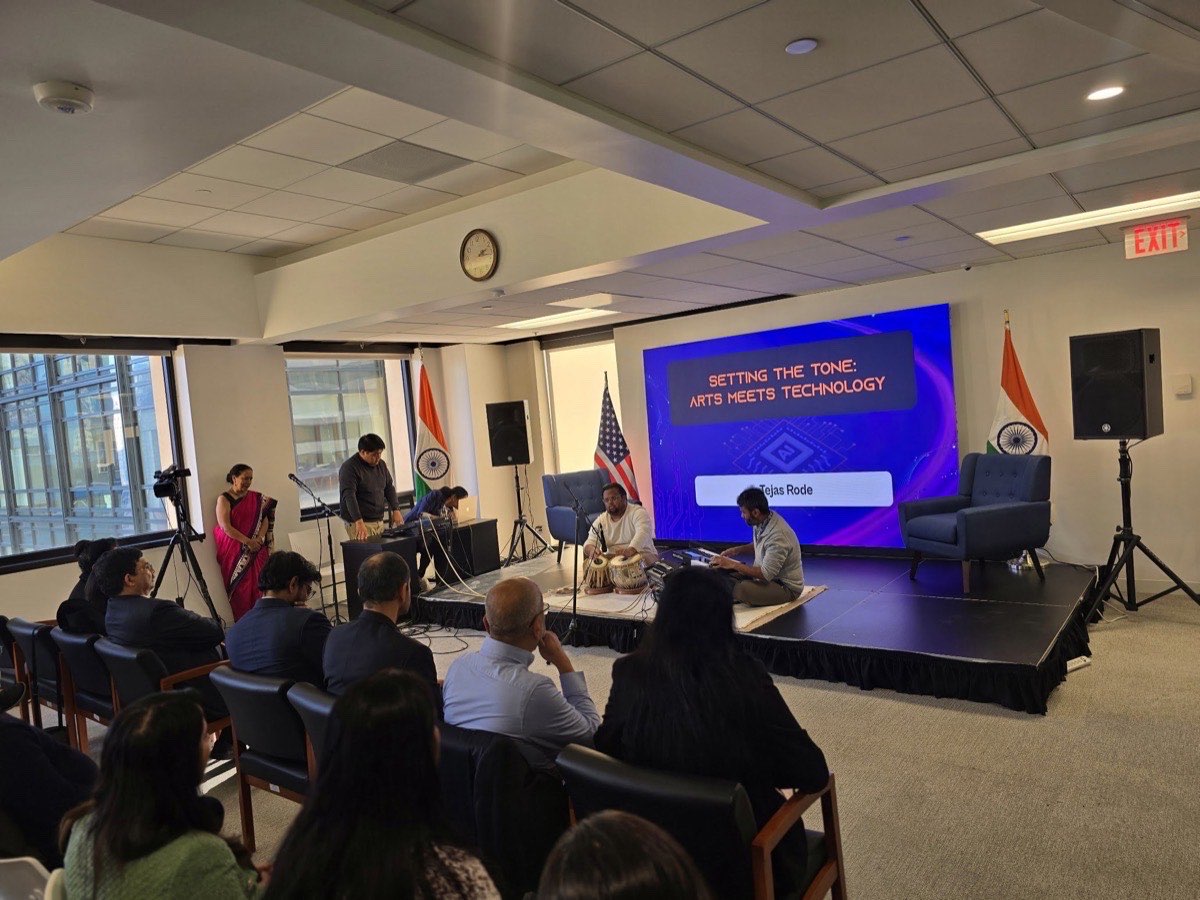
Tejas Rode and Petika
The evening opened with live music. Tejas plays the Petika, a digital microtonal harmonium he built to preserve the practices of Agra Gharana tradition of Indian classical music, a lineage going back centuries. The instrument itself is new, but the music it enables is ancient.
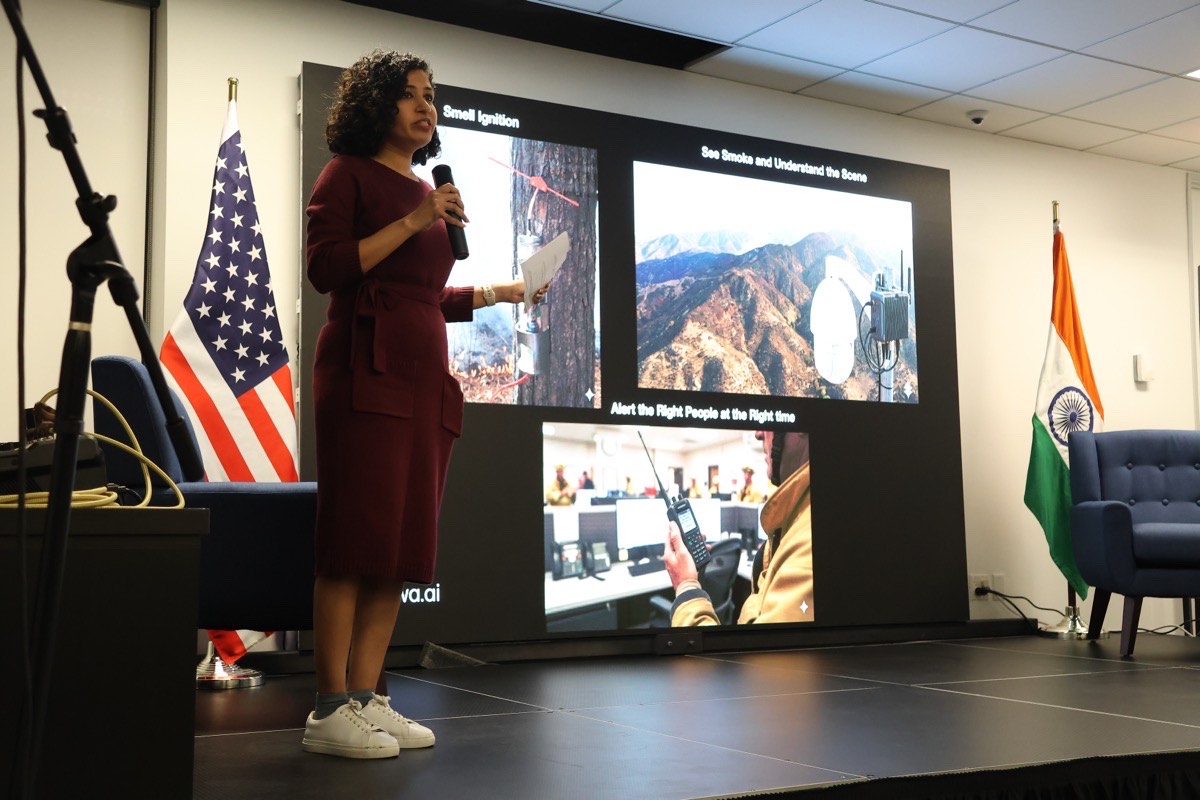
Navya Veeturi and WYWA
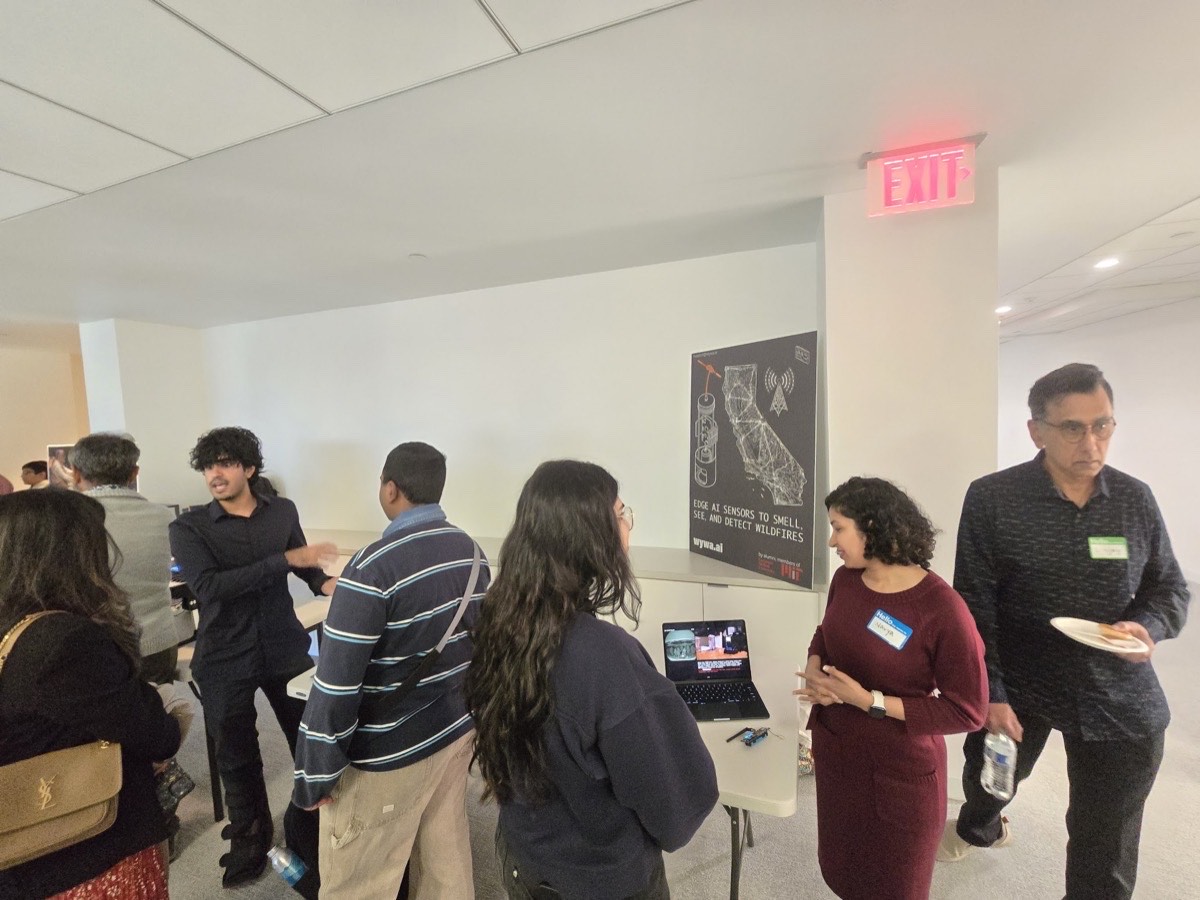
WYWA is wildfire detection through chemical sensing. Edge AI sensors that smell, see, and detect fires before they spread. Real hardware deployed in real forests. Not a simulation. Navya walked through the full chain on stage: small ignition, see smoke, alert the right people. She works at NVIDIA and has spun off this non-profit because she lives in the Valley and feels the need to use AI for problems right around her. Navya is a very good friend, outdoorsy and bonfire person.
Lesley Ray and BrainHome
Environmental health intelligence. Calibrating your home environment, light, air, sound, for cognitive wellness. Hardware prototypes, sensor arrays, all the things that were giving her trouble that morning. Rooting for her success!
Raji Kannan
Raji now runs BlueRobins, building hands-on learning for kids. She presented her story from back in the day when she built KIBA, a CES Innovation Award-winning robot. She also curated the student exhibition that ran alongside the main demos. Raji and Lakshmi also invited Neeru Khosla from CK-12, providing free K-12 educational resources to millions.

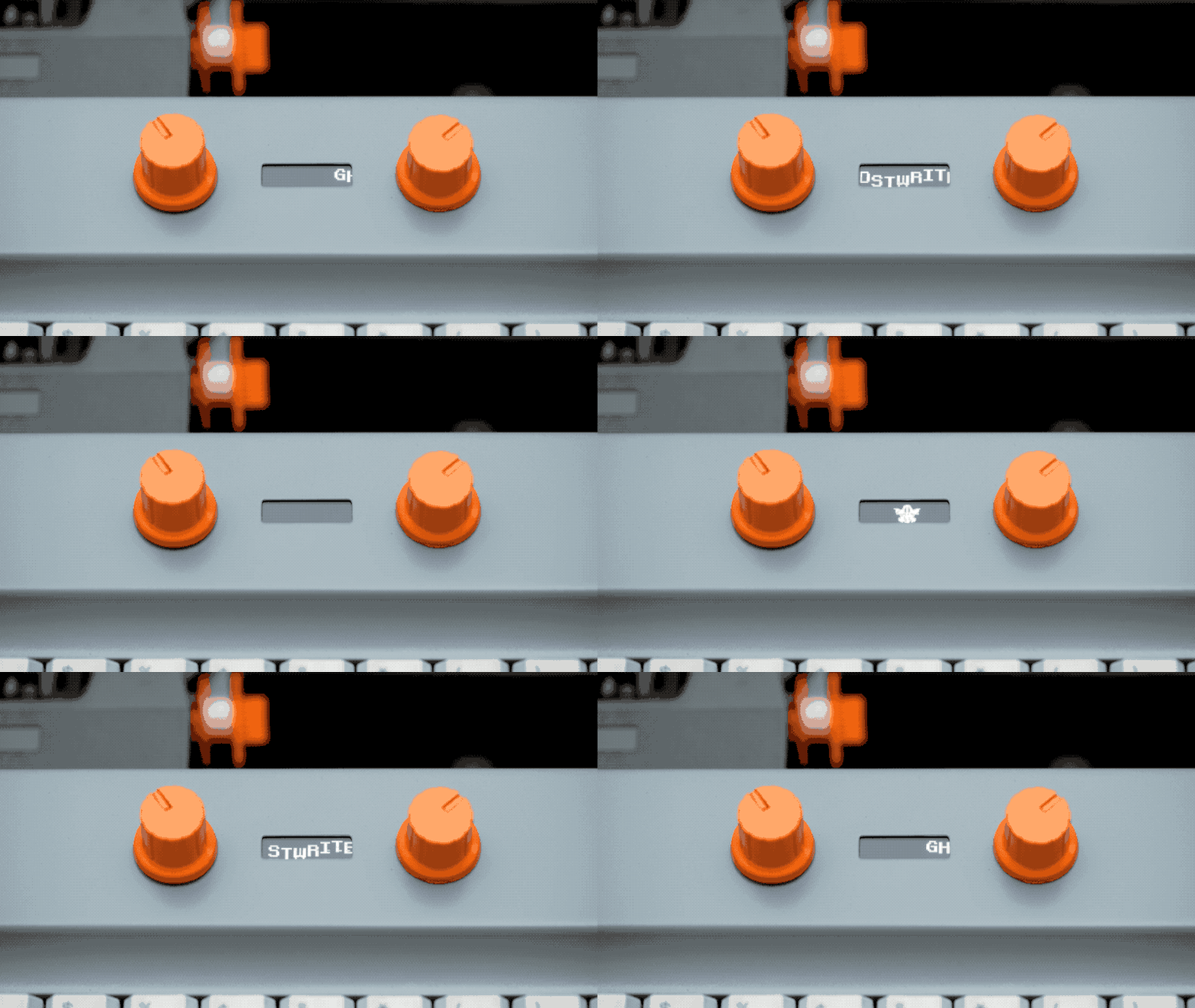
Arvind Sanjeev and Ghostwriter
Ghostwriter is a typewriter that writes on its own, powered by GPT-3. The irony of channeling the most advanced language model through the oldest writing interface. Arvind’s work lives at the intersection of art and technology, and this piece captures that tension perfectly. I’ve been a big fan of his work.
Rainier Labs and Terrier
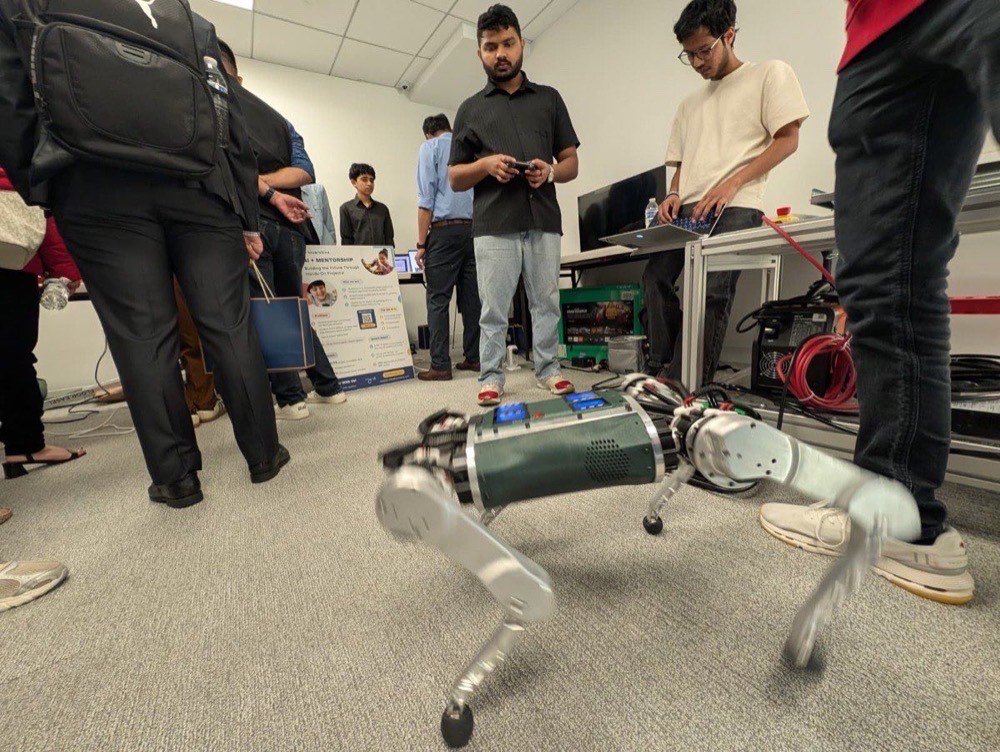
A Terrier robot dog walking through the demo area. Demo or die in its most literal form. Jay runs Rainier Labs.
The demo floor
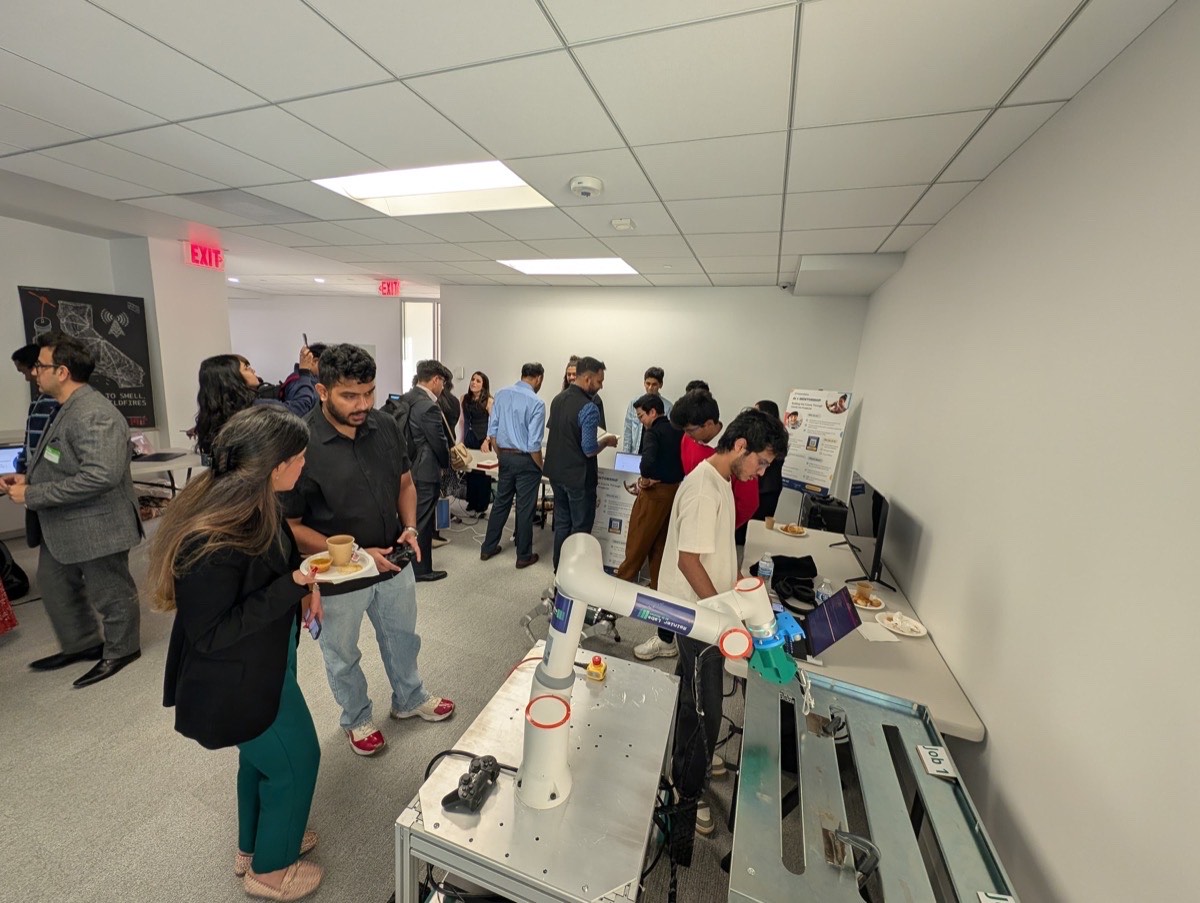
The in-between moments were my favorite part. People holding chai and plates of food while a robotic arm moved on the table next to them. Students showing projects Raji had curated. Navya’s WYWA poster on the wall. Conversations that only happen when there’s something physical to point at.
The panel
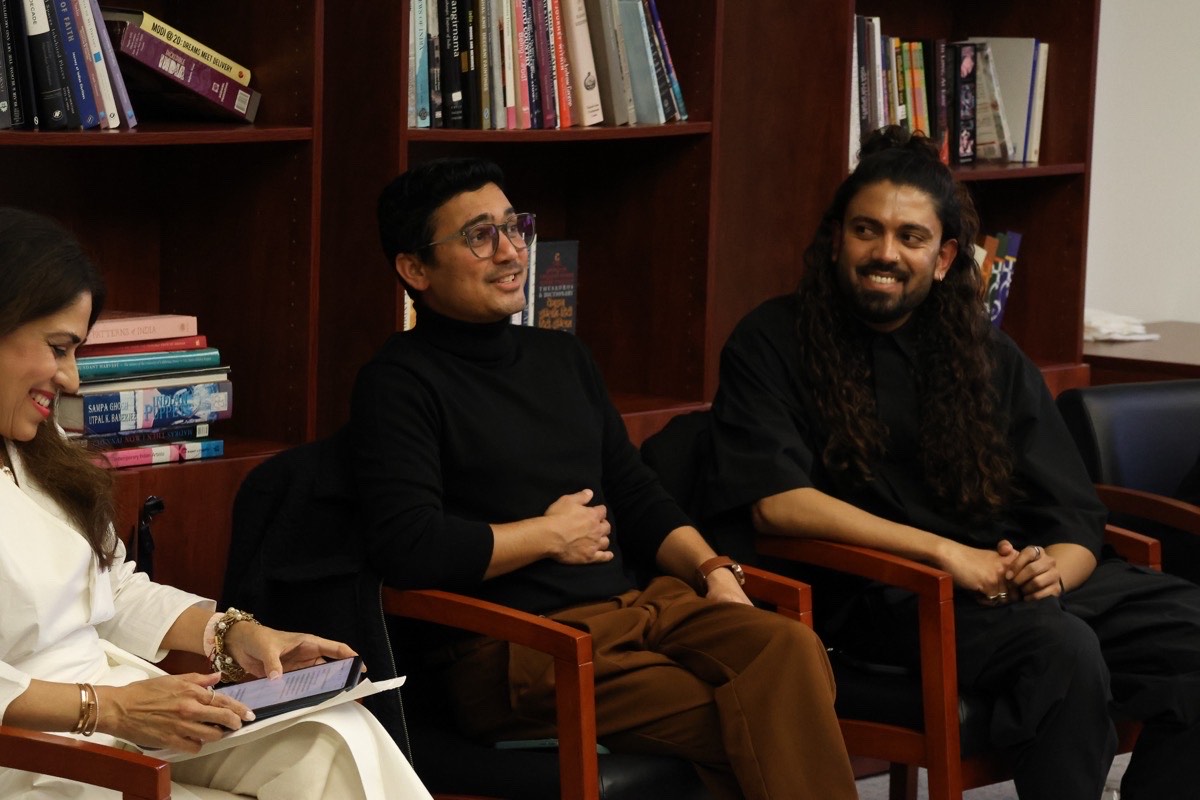
I missed this one. The panel explored how local stories, lived experiences, and cultural knowledge can shape multilingual, affordable, and human-centered design for underrepresented communities across India and the U.S. Supriya Gujral, Deepak Ramola, Arvind Sanjeev, and Dinoop Dayanand sat in the Consulate’s library for it. Deepak is a good friend, a wisdom historian and story collector who now teaches at Stanford. Arvind is an interaction artist. Dinoop and I used to work together at HP Labs.
Why this matters
Most of what we call AI today lives inside screens. But the breakthroughs that changed my own life were physical. They were things you could hold.